Replacing several missing teeth starts with choosing the right restoration, not counting gaps and ordering one implant for each tooth. You will be able to compare implant-supported bridges, overdentures, individual crowns, conventional bridges and partial dentures, then assess the planning, healing, maintenance and provider questions that affect your decision.
Key takeaways
- Adjacent gaps can often be restored with fewer implants supporting a fixed bridge.
- Request a 3D CBCT scan and a complete bite, gum and bone assessment.
- Plan for healing between surgery, implant placement and the final teeth.
- Compare cleaning access, stability and treatment time before choosing bridges or dentures.
How many implants do you need for several missing teeth?
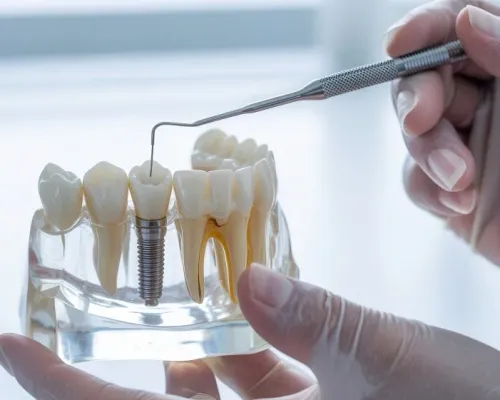
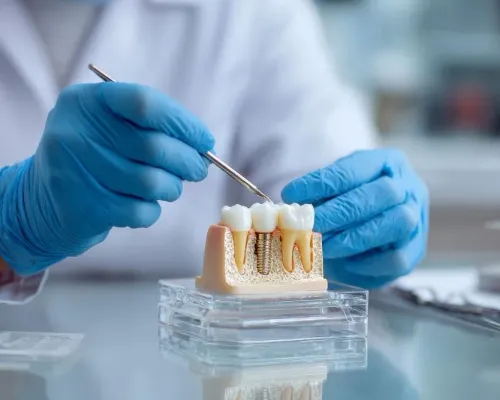
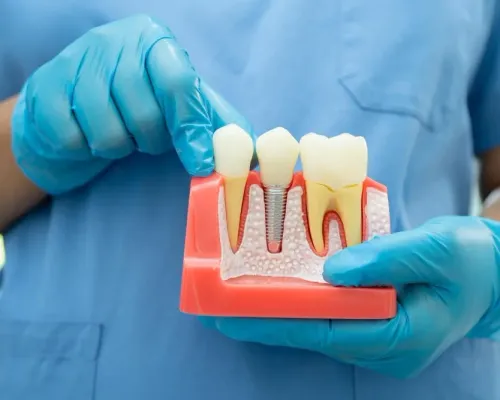
You do not automatically need one implant for every missing tooth. The design depends on whether the gaps are adjacent, how long the span is, the available bone, bite forces, hygiene access and the condition of your remaining teeth.
| Option | Typical design | When it fits |
|---|---|---|
| One implant per tooth | Separate implant crowns | Gaps are separated, bone and space are adequate, and individual cleaning is practical |
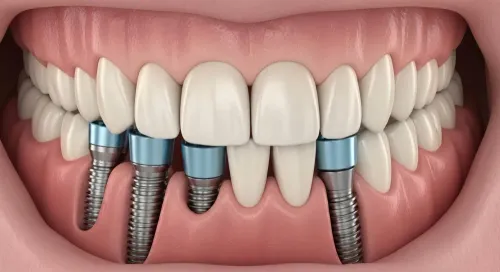
| Implant-supported bridge | Two or more implants carry several connected teeth | Several adjacent teeth are missing and the bridge span, bite and implant positions allow a stable, cleansable result |
| Implant-supported overdenture | Two to four or more implants retain a removable denture | Many teeth are missing, fixed teeth are unsuitable, or you need improved retention without a full fixed bridge |
| Conventional bridge or partial denture | Natural teeth or a removable framework provide support | Implant surgery, bone grafting, a sinus lift or long healing time does not suit your priorities |
A proper plan starts with the intended final teeth and works backward to implant position. Photographs, periodontal charting, digital scans or models, a diagnostic wax-up and radiographs help prevent implants being placed merely where bone happens to remain. That mistake can create poor tooth emergence, difficult cleaning and an uneven bridge.
For an implant centre in Nashik for several missing teeth, ask whether proposed multiple missing teeth implants in Nashik include a provisional bridge to test speech, appearance, bite and hygiene access. A definitive bridge follows healing and confirmation that the positions support a cleansable restoration.
What must be checked before multiple implants are planned?
Suitability depends on healthy gums, enough bone, a manageable bite and medical factors that support healing. A dentist plans the replacement teeth first, then works backward to decide where implants can provide stable support and allow you to clean around the bridge or crowns.
1. Check the gums and remaining teeth. Treat active gum disease, abscesses, decay and teeth with a hopeless prognosis before implant surgery. Bleeding gums or untreated infection increases the risk of inflammation around future implants.
2. Measure the jawbone. Dental radiographs and three-dimensional imaging show bone height, width and the position of nerves or the maxillary sinus. A narrow ridge, extraction-related bone loss or sinus pneumatization may require guided bone regeneration, ridge augmentation or a sinus-floor elevation, adding healing time and surgical risk.
3. Examine the bite and design. Photographs, periodontal charting, study models or digital scans, and a diagnostic wax-up show whether the proposed implant-supported bridge has adequate space, balanced contacts and cleaning access. Placing implants only where bone happens to remain can create poor appearance, overload or a bridge that traps plaque.
4. Review health and habits. Ask about diabetes control, smoking, medicines, previous radiation, immune conditions and healing problems. Poorly controlled diabetes does not automatically rule out implant treatment for several teeth in Nashik, but it may require medical coordination and delayed surgery.
Your plan should also explain whether fewer implants supporting a bridge, a removable overdenture or another option offers safer maintenance than one implant per tooth. The right choice is the one your gums, bone, bite and health can support long term.
What is the treatment sequence and how long does it take?
The sequence usually runs from restorative planning to final teeth, with healing time between surgery and loading the implants. Simple cases can take four to eight months; grafting or infection treatment can extend the timeline.
1. At the first examination, the clinician records your medical and dental history, medicines, smoking, diabetes control, gum condition, remaining teeth, bite and cleaning ability. Treat active gum disease, infection or hopeless teeth before implant placement.
2. Records include photographs, periodontal measurements, digital scans or study models, and dental radiographs. A cone-beam CT scan shows three-dimensional bone width, height, nerve position and sinus anatomy. The team designs the intended bridge, crowns or overdenture first, then plans implant positions to provide natural contours and cleaning access.
3. If extraction is needed, the dentist may place an implant immediately when infection, bone and stability permit. Otherwise, allow the socket to heal. A narrow ridge, vertical bone loss or a low sinus can require guided bone regeneration, ridge augmentation or sinus-floor elevation, adding several months for graft healing.
4. During implant surgery, the clinician places the planned number of implants and fits a temporary tooth replacement when safe. Do not treat temporary teeth as the final bridge; they test speech, appearance, bite and hygiene access.
5. Osseointegration usually takes about three to six months. After confirming stability and allowing the gums to mature, the dentist records the final bite and delivers the definitive bridge, crowns or denture.
This sequence guides multiple missing teeth implants in Nashik and implant treatment for several teeth in Nashik.
What are recovery and long-term cleaning like after multiple implants?
Expect swelling, bruising and tenderness after surgery, with discomfort strongest during the first few days. Follow the prescribed medicine and cleaning instructions, choose soft foods, and avoid chewing directly over the surgical sites until advised. A temporary bridge or denture can feel bulky while your speech and bite adjust.
Anyone choosing implant treatment for several teeth in Nashik should report pain that worsens, pus, fever, persistent bleeding, a loose implant, or a bridge that suddenly changes your bite. Smoking interferes with healing, while poorly controlled diabetes increases infection and healing risks; both need active management with your dental and medical teams.
Protect the implants daily by:
- Brushing twice a day with a soft toothbrush, concentrating on the gum line without scrubbing aggressively.
- Cleaning beneath the bridge and between implants with an interdental brush, floss threader, or water flosser recommended for your restoration.
- Removing and cleaning an implant-supported denture as instructed, then cleaning the gums and remaining teeth underneath it.
Implants do not decay, but the surrounding tissue can develop peri-implant mucositis, or inflammation without bone loss. Untreated inflammation can progress to peri-implantitis, which destroys supporting bone; trapped food, residual cement and irregular cleaning increase that risk.
Keep maintenance reviews at the interval set for your gum health and restoration, often every 3–6 months. Reviews check bleeding and pocket changes, professional-clean difficult areas, assess the bite and prosthesis, and use X-rays when bone support needs comparison.
How should you compare implants with bridges and partial dentures?
Stability, tooth preparation and long-term effort often matter more than the headline price. Compare the three options against the same practical criteria:
| Option | Stability | Tooth preparation | Maintenance and reversibility | Time and cost |
|---|---|---|---|---|
| Implant-supported bridge | Fixed and secure, but bite forces can loosen screws or chip porcelain | No cutting of neighbouring healthy teeth; surgery and possible grafting are required | Clean beneath the bridge with interdental aids; removing implants is surgical | Longest timeline because of healing; highest upfront cost |
| Conventional bridge | Fixed, but depends on the strength of supporting teeth | Supporting teeth are reshaped permanently; decay or gum problems can compromise the bridge | Brush and clean under the span; it can be replaced, but prepared teeth remain altered | Faster than implants; mid-range cost |
| Partial denture | Removable and less stable during chewing or speech, especially over a broad gap | Little or no tooth reduction, though clasps may rest on remaining teeth | Remove for cleaning; adjustments and replacements are easier, making it the most reversible | Usually quickest and lowest initial cost |
The cheapest option can cost more over time if poor cleaning, weak abutment teeth or an unstable bite causes repairs. An implant-supported bridge also does not feel like natural teeth and needs space beneath it for cleaning.
A tooth replacement centre in Nashik should show the proposed design, cleaning access, provisional stage, healing intervals and total fees. At Dr. Bhonsale's Dental Clinic & Implant Center, ask for that comparison before choosing an implant centre in Nashik for several missing teeth.
Related services
Replacement Of Missing Tooth Or Teeth Dental implants are permanent solutions for missing teeth, designed to mimic natural tooth roots and provide a strong foundation for fixed or... View service → |
Full mouth rehabilitation is a comprehensive approach to restore and rebuild a patient’s entire oral function and aesthetics. View service → |
Frequently asked questions
How many implants are needed to replace several missing teeth?
You do not automatically need one implant per tooth. Adjacent missing teeth can often be replaced by an implant-supported bridge, while separate gaps, bone availability and bite forces affect the final number.
What checks are needed before planning multiple dental implants?
The assessment should cover your gums, remaining teeth, bite forces, bone volume and medical history. A 3D CBCT scan helps assess the bone and identify the safest implant positions.
How long does treatment for several implants take?
Treatment includes examination and planning, implant placement, healing, and fitting the final crowns or bridge. The timeline depends on bone healing, any grafting, and whether temporary teeth are needed.
How do you clean around multiple dental implants?
Brush twice daily with a soft toothbrush and clean beneath implant bridges with floss threaders, interdental brushes or a water flosser. Attend scheduled professional maintenance visits.
Should you choose implants, a bridge or a partial denture?
Implants offer fixed support without preparing neighbouring teeth, but require surgery and healing. Bridges are quicker but use adjacent teeth, while partial dentures are removable and often require more daily adjustment and cleaning.
Related service
Fixed Teeth (Crowns & Bridges) Crowns (caps) and bridges are fixed prosthetic devices used to restore damaged teeth or replace missing ones. View service → |
Keywords