The first appointment should establish whether an implant suits your bone, gums, bite, health and daily cleaning ability before anyone schedules surgery. By following the sequence from examination and imaging through healing, crown delivery and maintenance, you can understand what each visit accomplishes and identify costs or steps missing from a treatment plan.
Key takeaways
- Expect examination and imaging before implant surgery.
- Ask how your diagnosis changes the treatment sequence.
- Confirm healing time, temporary teeth and final crown milestones.
- Compare implant plans by risks, restoration design and follow-up care.
1. Consultation, examination and imaging come before implant surgery
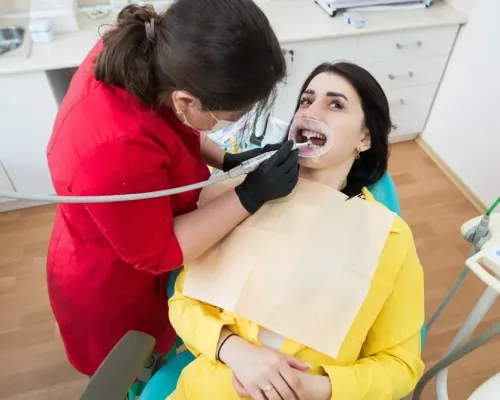
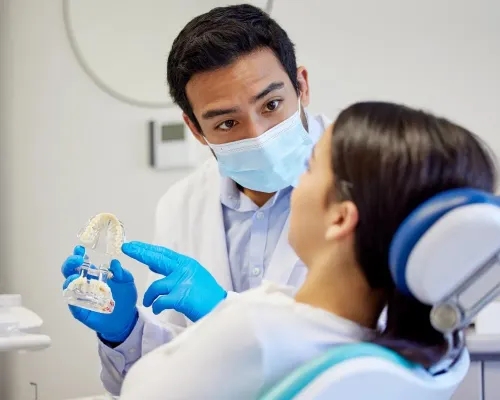
The first of the dental implant placement steps at a dental clinic in Nashik is a diagnostic and risk-assessment appointment, not surgery. The clinician decides whether an implant is suitable by matching your oral health, bone anatomy, bite and medical risks to the planned crown, bridge or complete-arch restoration.
1. The appointment begins with your medical and dental history. Report diabetes control, smoking, previous gum disease, medicines that affect bleeding or bone healing, allergies and severe teeth grinding. The clinician also discusses the missing tooth, its history and your treatment goals.
2. The examination covers the gums, remaining teeth, jaw joints, bite and the space available for the replacement. Photographs and measurements help reveal gum infection, decay, unstable neighbouring teeth, insufficient clearance or excessive bite forces. An implant does not cure active gum disease.
3. Dental X-rays provide an initial view of roots, bone and nearby structures. The clinician requests a three-dimensional CBCT scan when cross-sectional detail is needed to measure bone width and height or locate the inferior alveolar nerve and maxillary sinus.
4. The plan is suitable only after infection, uncontrolled diabetes, poor oral hygiene or heavy smoking is addressed. If the ridge lacks width or height, bone grafting may come before or alongside implant placement. A failing tooth may require extraction and ridge preservation first, while a healed socket may proceed directly to implant planning.
2. Your diagnosis determines the treatment sequence
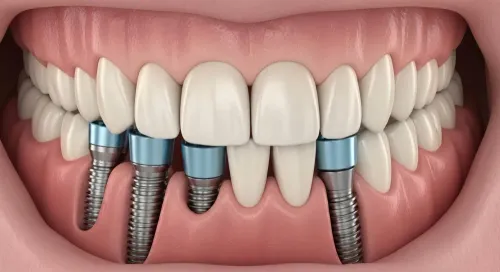
A single missing tooth, several missing teeth and a complete arch need different implant sequences because the number, position and type of supporting implants change. The planned restoration also changes the surgery: a crown needs one precise implant, while a bridge or full-arch prosthesis needs a coordinated layout that distributes chewing forces.
| Case | Typical sequence | Why the sequence changes |
|---|---|---|
| Single missing tooth | Assess the site, place one implant, allow healing, then fit an abutment and crown | The implant must match the neighbouring roots, available space and bite |
| Several missing teeth | Plan implant positions for a bridge or separate crowns; add extraction, grafting or staged healing when required | Implants support more teeth, so spacing, bone volume and bite forces must work together |
| Complete arch | Plan the final full-arch prosthesis first, then place strategically distributed implants, with temporary teeth when suitable | The whole arch must be evaluated for failing teeth, bone anatomy, hygiene access and load distribution |
A healed extraction site may proceed directly to implant placement, but a failing tooth may need extraction and ridge preservation first. A severely resorbed ridge can require grafting before implant surgery; loss of bone below the upper-back sinus may add sinus-floor augmentation and another healing period.
This is why implant treatment steps in Nashik should follow the diagnosis rather than a fixed package. Active gum disease, uncontrolled diabetes, heavy smoking, severe bruxism or poor oral hygiene can require treatment or stabilisation before surgery.
The final plan should state which stages are needed, who performs them and what restoration the implants will support.
3. What happens on implant-surgery day
On surgery day, the clinician places the implant fixture into the jawbone, not the visible replacement tooth. A dental implant procedure in Nashik usually uses local anaesthetic; sedation or general anaesthesia depends on anxiety, medical needs, procedure extent and the facility’s capabilities.
- The clinician numbs the area and makes a small opening in the gum. A flap is raised when direct access to the bone is needed.
- Sequential drills prepare an osteotomy, the precisely shaped channel for the fixture. Drilling under controlled conditions limits heat and protects the surrounding bone.
- The fixture is inserted into the prepared site at the planned depth and angulation. The clinician may place a healing component or cover screw, depending on the restoration plan.
- The gum is repositioned and closed with sutures. Do not expect the definitive crown to be attached during this operation unless a carefully selected immediate-restoration plan applies.
The three parts have different jobs:
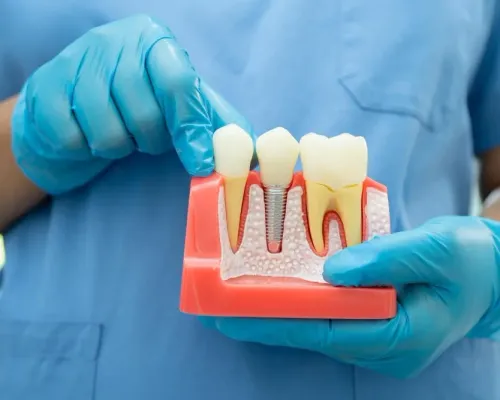
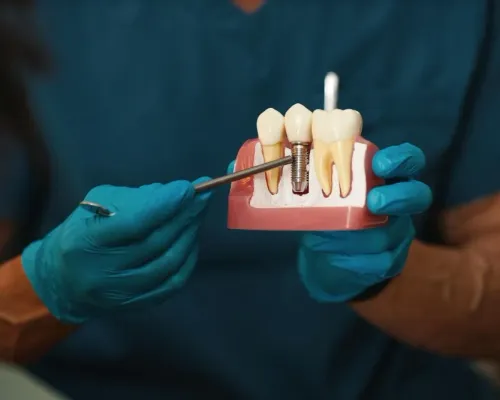
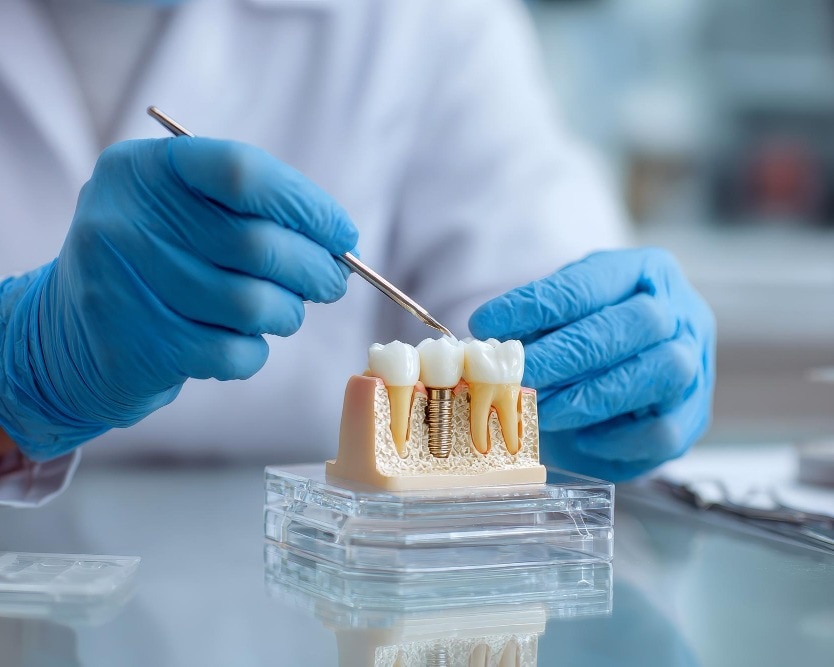
- Fixture: the screw-shaped titanium or ceramic component inside the jawbone. Bone healing around it provides the foundation for chewing forces.
- Abutment: the connector fitted to the fixture after integration or, in selected protocols, during an earlier stage. It supports the restoration above the gum.
- Visible tooth: the crown, bridge unit or denture tooth that replaces the missing tooth in the mouth. It is fabricated and fitted as a separate restorative stage, then checked for contacts, bite and appearance.
4. Healing, temporary teeth and final crown delivery
After surgery, the implant is usually left undisturbed while bone bonds to its surface. This healing period protects osseointegration; a temporary tooth does not automatically mean the implant is ready for normal chewing.
1. Follow the surgical instructions for cleaning, prescribed pain relief and protecting the site. Avoid smoking, keep pressure off the implant area, and attend the scheduled review.
Increasing swelling after the early recovery period, persistent bleeding, fever, pus, worsening pain, altered sensation, or a loose implant or temporary tooth requires prompt contact with the treating clinic.
2. Receive a temporary tooth only when it suits the implant’s stability, bite, bone and soft-tissue condition. An immediate or early provisional restoration can restore appearance, but the clinician may keep it out of heavy contact so chewing forces do not disturb healing.
3. Return for an integration and soft-tissue assessment after the planned healing interval. The clinician checks the implant, gum shape, neighbouring teeth and bite before starting the definitive restoration; healing takes longer when grafting or other surgery was included.
4. Have the final crown, bridge or denture designed from an impression or digital scan. The laboratory fabricates the abutment and visible restoration, then the clinician checks shade, contacts, fit and occlusion before tightening or cementing it.
Ask whether the quoted plan for dental clinic implants in Nashik includes the temporary tooth, abutment, definitive restoration, reviews and any adjustment visits. The implant is the anchor; the visible tooth is a separate prosthodontic component.
5. How to compare implant plans and protect the result
Choose the plan that states what happens before surgery, who performs each stage, what is included in the fee and how complications will be handled. For dental implant placement in Nashik, do not compare headline prices alone.
Ask the clinic for written answers to these questions:
- Has active gum disease, decay, smoking, diabetes control, medication use, bleeding risk and severe bruxism been assessed?
- Who places the fixture, who designs the crown, and who provides follow-up?
- Does the estimate include extraction, CBCT, bone grafting, sinus-floor augmentation, temporary teeth, abutment and definitive crown?
- What is the review schedule, and what happens if the implant fails or the temporary tooth loosens?
- Which implant system and prosthetic components will be recorded for future repairs?
| Quoted plan | What it should show | Risk if omitted |
|---|---|---|
| Basic surgical quote | Fixture placement and immediate surgical fees | Extraction, grafting or restoration may cost extra |
| Complete treatment quote | Surgery, healing reviews, abutment and final crown | Fewer unexpected charges |
| Maintenance arrangement | Professional reviews, plaque-control guidance and prosthesis checks | Peri-implant disease can go unnoticed |
Dr. Bhonsale's Dental Clinic & Implant Center is one provider you can ask to separate surgical, restorative and maintenance fees so the comparison is meaningful.
After treatment, contact the clinic promptly for increasing swelling, fever, pus, persistent bleeding, worsening pain, altered sensation or a loose implant or temporary restoration. Long-term success requires professional cleaning and checks of the implant tissues, bite, contacts and prosthetic screws—not just a completed crown.
Related service
Replacement Of Missing Tooth Or Teeth Dental implants are permanent solutions for missing teeth, designed to mimic natural tooth roots and provide a strong foundation for fixed or... View service → |
Frequently asked questions
What happens before dental implant surgery in Nashik?
The clinician examines your mouth, reviews your medical and dental history, evaluates your bite and studies imaging to assess bone anatomy and implant suitability.
Why does the diagnosis affect implant treatment steps?
Bone volume, gum health, infection, missing-tooth location, bite and the planned crown, bridge or complete-arch restoration determine the sequence of treatment.
What happens on the day of implant surgery?
The team confirms the treatment plan, prepares the surgical area, places the implant in the planned position and gives instructions for early recovery.
When do temporary and final teeth arrive after implant placement?
Timing depends on healing, implant stability, bone or gum procedures and the restoration plan. Temporary teeth may support function while the implant heals; the final crown is delivered after the clinician confirms readiness.
How can you compare dental implant treatment plans?
Compare the diagnosis, imaging, implant and restoration design, need for preparatory procedures, healing plan, temporary teeth, follow-up schedule and risks—not only the quoted price.
Keywords