A cracked, decayed or painful tooth is not automatically a candidate for extraction and an implant. You need a clinic that can first judge whether the tooth is restorable, then explain the surgical, restorative and maintenance stages if tooth replacement is the safer choice.
Key takeaways
- Preserve the tooth when a dentist can restore it predictably.
- Seek urgent care for swelling, fever, severe pain, or uncontrolled bleeding.
- Compare scans, treatment stages, implant systems, fees, and follow-up before booking.
- Ask how bone healing, temporary teeth, and long-term maintenance affect your timeline.
Can the damaged tooth be saved, or does it need an implant?
A damaged tooth should be extracted only when a dentist cannot restore it predictably, not simply because it hurts, is cracked, or needs root-canal treatment.
The assessment considers remaining tooth structure, a root fracture, decay below the gum, gum and bone support, the bite, and whether a filling, inlay, onlay, crown, or root-canal restoration can last.
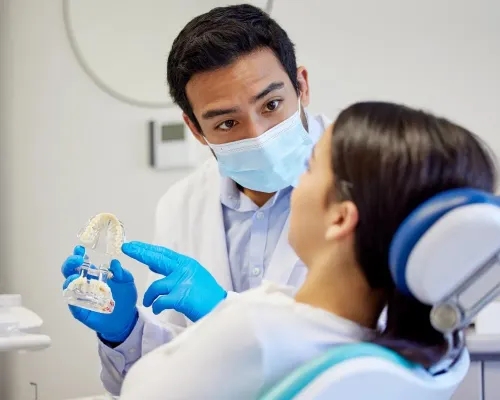
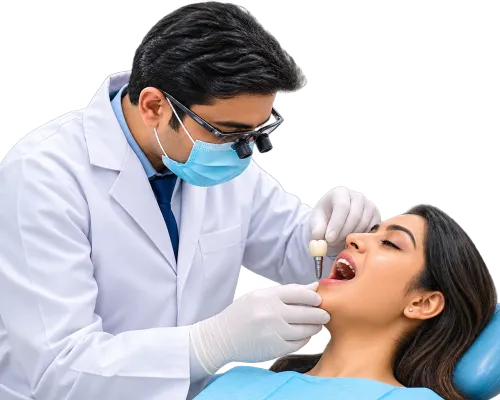
At the first appointment, expect an examination, dental X-rays and CBCT imaging when indicated, gum measurements, bite evaluation, and a review of medical conditions and medicines. Ask the dentist to compare the tooth’s likely restorative outcome with extraction and implant replacement.
A restorable natural tooth may avoid surgery, healing time, grafting, and the long-term maintenance an implant requires.
Use this checklist before choosing dental implant treatment in Nashik for a damaged tooth:
- Ask whether a crack extends into the root or below the gum.
- Ask how much sound tooth structure will remain after decay removal.
- Ask whether gum disease, bone loss, or an unfavourable bite changes the outlook.
- Ask which restoration is suitable: filling, inlay, onlay, crown, or root canal followed by a crown.
- Ask what temporary tooth you will use if extraction or implant healing prevents an immediate permanent crown.
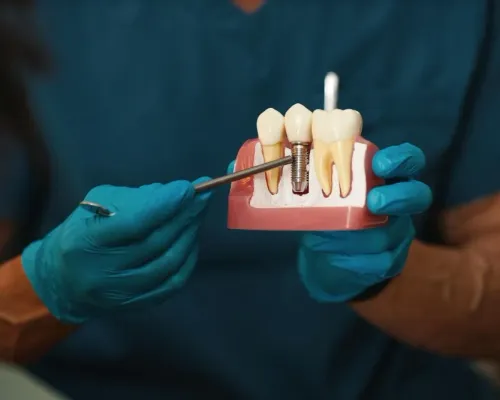
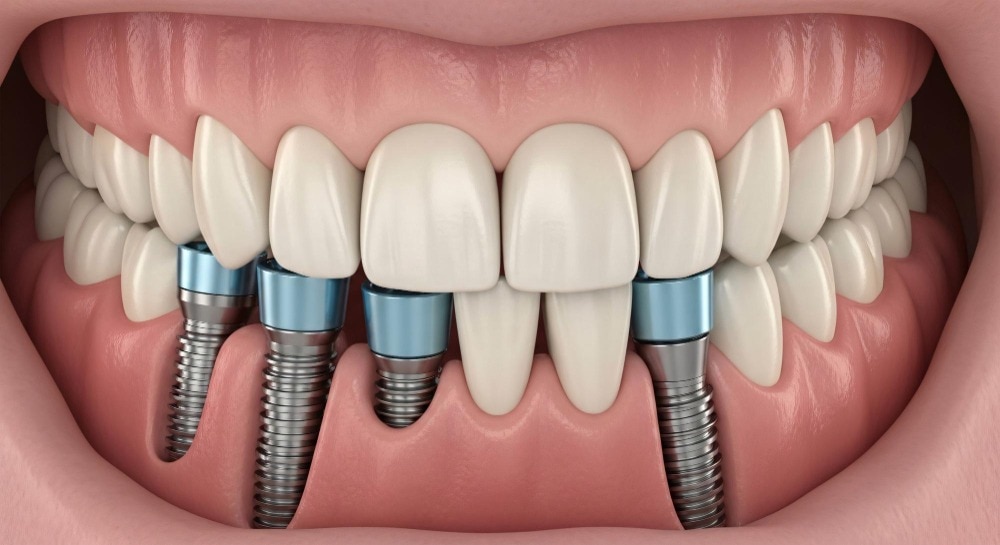
- Confirm that an implant replaces the root; the visible tooth still requires an abutment and crown.
Facial swelling, fever, uncontrolled bleeding, severe night pain, trauma, difficulty swallowing, or difficulty breathing needs urgent assessment, not a routine consultation for dental implant treatment in Nashik. Smoking also raises implant risks, so disclose tobacco use and request a cessation plan.
When does a damaged tooth need urgent care before implant planning?
Facial swelling, fever, difficulty breathing or swallowing, inability to open your mouth, rapidly worsening pain, uncontrolled bleeding, or severe trauma requires urgent dental or medical assessment before implant planning. Do not wait for a routine dental implant appointment if infection could be spreading.
| Situation | What to do | Why it matters |
|---|---|---|
| Facial swelling, fever, swallowing or breathing difficulty | Seek urgent dental or emergency medical care now | A spreading infection can threaten the airway and surrounding tissues |
| Severe night pain, increasing swelling, or inability to open the mouth | Arrange same-day dental assessment | The tooth may have an abscess or deep infection needing immediate treatment |
| Uncontrolled bleeding or major dental trauma | Seek emergency dental care | Bleeding, fractured jaw structures, or displaced teeth need prompt control |
| Pain from a broken tooth without these warning signs | Book a prompt dental examination | The tooth might still be restorable; extraction is not automatic |
During the first dental implant appointment, expect a structured assessment rather than an immediate extraction:
- The dentist records your medical history, medications, diabetes control, allergies, and previous healing problems.
- They examine the damaged tooth, roots, gums, remaining teeth, decay, periodontal support, bite, and available space.
- They use dental X-rays and choose CBCT imaging when three-dimensional information will change the plan.
- They discuss a filling, crown, root canal, extraction, implant, bridge, or other suitable option.
- Active gum disease, untreated decay, poor hygiene, or uncontrolled medical conditions are treated before implant surgery.
What is the treatment sequence and how long can it take?
The timeline starts with deciding whether the damaged tooth is restorable, not with booking surgery. The dentist examines remaining tooth structure, roots, gum and bone support, bite, decay below the gum and the chance of a predictable filling, crown or root-canal restoration.
1. Assessment and planning: Dental X-rays, and CBCT imaging when bone, roots or nerves need three-dimensional review, guide the choice between preserving the tooth and extraction. Medical history, medicines and diabetes control also affect surgical timing.
2. Extraction and site care: If the tooth cannot be predictably restored, it is removed. A temporary tooth may be a removable partial denture, bonded tooth or temporary fixed unit attached to neighbouring teeth. Do not assume a permanent crown can be fitted on extraction day.
3. Bone healing or grafting: An uncomplicated extraction site may need about 6 to 12 weeks before implant placement. If bone grafting is needed, healing can add roughly 3 to 6 months, depending on the graft and clinical review.
4. Implant placement and integration: The implant replaces the root, not the visible tooth. It commonly needs about 2 to 6 months to bond with bone before the abutment and crown are fitted; a temporary arrangement protects appearance during this interval.
5. Final restoration: After integration, the dentist checks the implant, gum and bite, then fits the abutment and custom crown. This staged pathway is the realistic basis for dental implant treatment in Nashik and complete tooth replacement in Nashik.
How should you compare an implant clinic in Nashik before booking?
Compare the complete care pathway, not the implant line on a quotation. A reliable implant treatment clinic in Nashik should explain who examines the damaged tooth, who performs surgery and restoration, and how each stage is coordinated.
| Area | Ask before booking | Why it matters |
|---|---|---|
| Clinical care | Can the tooth be predictably restored, and who handles extraction, implant surgery, abutment and crown? | Pain or a crack does not automatically make extraction the best choice. |
| Planning | Are examination, gum and bite assessment, X-rays, and CBCT included when anatomy requires it? | CBCT adds information for selected cases; it is not a routine substitute for clinical assessment. |
| Pricing | Does the estimate include extraction, grafting, healing reviews, temporary tooth, implant, abutment, crown and maintenance? | A graft adds stages, healing time, expense and possible complications. |
| Contingencies | What happens if the implant fails or a graft does not heal, and what costs follow? | A written response exposes gaps hidden by a low headline fee. |
| Follow-up | Who checks healing, adjusts the bite and provides hygiene reviews after fitting? | Neglected inflammation can threaten an otherwise successful result. |
At a dental implant appointment, disclose smoking, diabetes, medicines and previous gum disease. Smoking is linked with poorer implant outcomes and peri-implant disease, so ask for a documented cessation plan rather than a silent surcharge or exclusion.
Dr. Bhonsale's Dental Clinic & Implant Center can be assessed using these same questions when you compare dental implant treatment in Nashik: request a written sequence, named implant system, warranty terms and follow-up schedule before paying a deposit.
Related services
Replacement Of Missing Tooth Or Teeth Dental implants are permanent solutions for missing teeth, designed to mimic natural tooth roots and provide a strong foundation for fixed or... View service → |
Fixed Teeth (Crowns & Bridges) Crowns (caps) and bridges are fixed prosthetic devices used to restore damaged teeth or replace missing ones. View service → |
Which alternatives and long-term responsibilities should you weigh?
A restorable natural tooth is usually worth preserving; extraction is not a shortcut around pain, decay or a fracture. For dental implant treatment in Nashik for a damaged tooth, compare the tooth’s remaining structure, root, gum support, bite and predictable restoration against replacement options.
| Option | Prefer it when | Main trade-off |
|---|---|---|
| Retained natural tooth | A filling, onlay, crown or root-canal restoration can predictably save the tooth | It still needs daily cleaning and can fail if the crack or decay progresses |
| Conventional fixed bridge | Neighbouring teeth already need crowns and can support the replacement | Healthy adjacent enamel must be prepared, and cleaning beneath the bridge takes effort |
| Resin-bonded bridge | One missing tooth has suitable supporting enamel and low bite stress | It can debond, especially under heavy biting or grinding |
| Removable partial denture | Several teeth are missing, surgery is unsuitable, or a lower initial cost matters | It moves more than a fixed replacement and requires removal, cleaning and adjustment |
| Implant with crown | Adjacent teeth are healthy and bone, gums and medical health support surgery | It involves surgery, healing, ongoing hygiene and possible repair costs |
After tooth replacement in Nashik, treat an implant as a lifelong restoration, not a maintenance-free tooth. Brush twice daily with fluoride toothpaste, clean around the implant with interdental brushes or floss designed for the space, and attend reviews and professional cleaning at the interval your dentist sets.
- Report bleeding, swelling, bad taste, looseness or a chipped crown promptly.
- Avoid smoking, and use a night guard if grinding threatens the crown or implant.
Frequently asked questions
Can a damaged tooth be saved, or does it need an implant?
A dentist should recommend extraction only when the tooth cannot be restored predictably. Cracks, pain, or root-canal treatment alone do not automatically require an implant.
When does a damaged tooth need urgent care before implant planning?
Seek urgent dental care for facial swelling, fever, severe or worsening pain, difficulty swallowing or breathing, or bleeding that does not stop with firm pressure.
What is the treatment sequence and how long can dental implant treatment take?
The sequence can include examination and imaging, extraction if required, infection control, bone healing or grafting, implant placement, healing, an abutment and crown. The timeline depends on infection, bone volume, grafting, and healing.
How should I compare an implant clinic in Nashik before booking?
Ask who will place and restore the implant, which scans and implant system they use, what each fee includes, how complications are handled, and what follow-up schedule you receive.
What alternatives and long-term responsibilities should I weigh?
Discuss saving the tooth, a fixed bridge, or a removable partial denture alongside an implant. Implants require daily cleaning, professional reviews, and replacement of the crown or components when they wear.
Related services
involves repairing damaged teeth using tooth-colored fillings, inlays, or onlays. View service → |
Root canal treatment is a pain-relieving procedure to save a tooth with infected or damaged pulp. Dr. View service → |
Tooth Extraction (Including Third Molars) Tooth extraction involves the safe removal of teeth that are damaged, decayed, or impacted. Dr. View service → |
Keywords