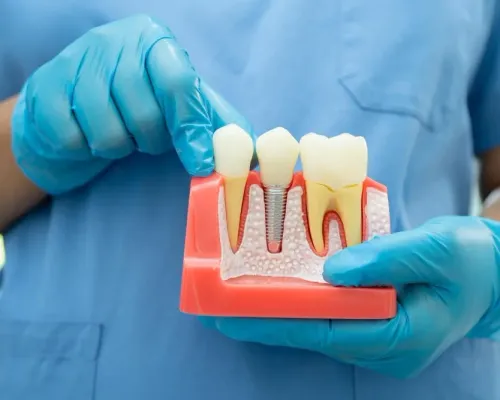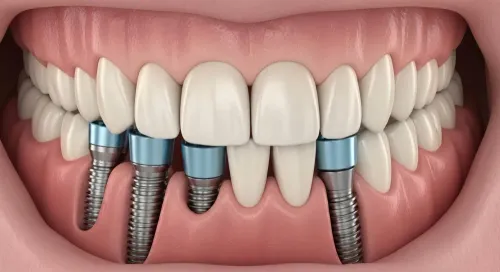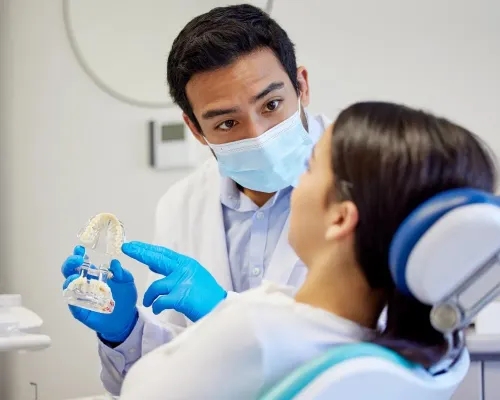
An implant consultation should settle more than whether an implant can be placed. You need enough information to compare the proposed surgery, restoration, timeline, total fee, risks and long-term maintenance before you consent.
Key takeaways
- Bring X-rays, medication details, allergies, and medical history.
- Ask for the implant brand, site plan, and complete treatment sequence.
- Get alternatives, healing time, loading date, and every fee in writing.
- Compare clinical evidence, consent quality, and maintenance support—not marketing claims.
Bring the right information and test whether you are a suitable candidate
Take your previous dental X-rays, treatment records, medication list, allergy details, and a note of medical conditions such as diabetes, osteoporosis, heart disease, or bleeding disorders. Add information about smoking, earlier extractions, and any loose or painful teeth.
For dental implant treatment in Nashik, what to confirm first is whether the proposed sequence and your health support predictable healing.
1. Ask the implantologist in Nashik to examine bone volume and density at the proposed site. A periapical or panoramic X-ray may be enough for an initial view; request three-dimensional CBCT imaging when nerve position, sinus anatomy, grafting, or a complex site needs assessment.
2. Confirm a periodontal examination with probing. Active gum disease must be treated before placement because untreated periodontitis raises the risk of peri-implant infection and bone loss.
3. Ask the clinician to check your bite forces, tooth grinding, neighbouring teeth, oral hygiene, jaw opening, and the condition of any remaining teeth. A strong bite or an infected adjacent tooth can change the restoration or sequence.
4. Verify the dentist’s registration, dental qualification, structured implant training, experience with your proposed procedure, and referral plan for complications. “Implantologist” alone does not prove those credentials.
5. Request a written plan naming the implant site, crown, bridge, or overdenture, and any extraction, grafting, healing, placement, abutment, and crown stages. Ask whether a provisional tooth, follow-ups, and each stage are included in the quoted fee.
Confirm the records, implant site and treatment sequence
Expect a clinical examination before any implant is recommended: periodontal probing, infection checks, bite-force assessment, inspection of adjacent teeth, oral-hygiene review and medical-history screening. Tell the clinician about diabetes, medicines and delayed healing; poor glycaemic control can change the timing or require treatment first.
Ask which diagnostic records will support the decision:
- Periapical or panoramic X-rays to assess roots, existing teeth and broad jaw anatomy.
- Three-dimensional CBCT imaging when bone width, nerve position, sinus anatomy or grafting needs cannot be judged from two-dimensional X-rays.
- Clinical photographs plus digital scans or impressions to plan tooth shape, bite and appearance.
- A periodontal chart recording pocket depths, bleeding and infection sites.
| Record | What it confirms | What to ask |
|---|---|---|
| Periapical or panoramic X-ray | Teeth, roots and jaw overview | Which findings affect the proposed site? |
| CBCT scan | Three-dimensional bone and nerve or sinus relationships | Is grafting or sinus augmentation needed? |
| Photos and scan or impression | Restoration design and bite | Will the result be a crown, bridge or overdenture? |
| Periodontal chart | Gum stability around the implant and neighbouring teeth | Is gum treatment complete before surgery? |
The written plan for dental implant treatment in Nashik should identify each implant site, extraction or grafting stage, healing period, implant placement, abutment connection and crown delivery. It should also state whether a provisional tooth is supplied and which surgical, abutment and prosthetic stages the quoted fee excludes.
Make the timeline, alternatives and quotation complete
A complete plan names every stage, the waiting time between stages, the alternatives, and the fee for each component. Dental implant treatment in Nashik is a sequence: examination and planning, gum treatment or extraction, grafting when needed, implant placement, healing, abutment connection, provisional or definitive restoration, and continuing maintenance.
Ask the dental clinic in Nashik for a written quotation that states whether each item is included:
- Consultation, periodontal probing, radiographs or CBCT, infection treatment, extraction, medicines, and bone grafting or sinus augmentation.
- Implant fixture placement, the abutment, provisional restoration, definitive crown, and any laboratory or digital scanning fees.
- Scheduled follow-ups, maintenance visits, and management of complications, including referral or additional treatment if the implant fails.
“Implant cost” alone can omit the abutment, crown, preparation, and aftercare. Ask which stages are charged separately, the payment point for each stage, and what happens if healing delays crown delivery.
Consent is incomplete if an implant is presented as the only replacement. Ask whether these alternatives suit your teeth, bone and budget:
- Conventional fixed bridge
- Removable partial or complete denture
- Preserving the space without replacement
- No treatment, when leaving the space is clinically acceptable
Active periodontitis must be controlled before placement. Confirm that gum treatment and a documented maintenance plan are included; untreated infection raises the risk of peri-implant disease. A complete quotation also states who manages surgical, prosthetic and biological complications.
Compare the implant centre by evidence, not marketing language
A title alone does not prove competence. Before choosing an implantologist in Nashik, verify the dentist’s current registration number, dental qualification, postgraduate or structured implant training, and experience with the exact procedure you need. Ask how many comparable cases they handle and who manages complications outside clinic hours.
Use this checklist when visiting an implant centre in Nashik:
- Inspect the surgical room, sealed instrument packs, autoclave cycle records, chemical indicators and periodic biological spore-test records.
- Ask whether implant components are traceable by manufacturer, product name and batch number.
- Confirm access to oxygen, monitoring equipment, emergency medicines and a named hospital referral pathway.
- Ask for the written policy covering infection, nerve symptoms, loose implants, fractured crowns and peri-implant bone loss.
- Ask who pays for examination, removal, grafting, replacement or prosthetic retreatment after each type of failure.
Compare providers against the same evidence:
| Evidence | Ask to see or explain | Warning sign |
|---|---|---|
| Dentist | Registration, training and comparable case experience | “Implantologist” is the only credential |
| Sterilisation | Pack labels, cycle records and monitoring process | “We follow proper hygiene” without records |
| Emergency care | Equipment, trained staff, after-hours contact and hospital referral | No named response for bleeding or allergic reaction |
| Complications | Clinical responsibility and patient cost for each retreatment | A warranty replaces a complication policy |
Dr. Bhonsale's Dental Clinic & Implant Center should be compared using these same questions, not its procedure descriptions or promotional claims. A clear answer matters more than a polished reception area.
Related service
Replacement Of Missing Tooth Or Teeth Dental implants are permanent solutions for missing teeth, designed to mimic natural tooth roots and provide a strong foundation for fixed or... View service → |
Confirm consent, loading decisions and lifelong maintenance
Do not sign consent until you know what happens if the implant fails, the nerve or sinus is injured, infection develops, grafting does not succeed, or the crown fractures. Confirm the alternative of leaving the gap, a bridge, or a denture, plus the extra cost of treating complications.
1. Ask whether loading is immediate, early, or delayed. Confirm when the implant will carry a provisional tooth, what restrictions apply during healing, and what clinical or imaging finding permits the definitive crown. Loading too soon can disrupt osseointegration.
2. Require an itemised quotation from the dental clinic in Nashik covering consultation, X-rays or CBCT, extraction, grafting, fixture, abutment, provisional restoration, crown, medicines, follow-ups, and complication management. “Implant cost” alone can omit essential stages.
3. Get the recall schedule in writing: review after surgery, checks during healing, examination of peri-implant tissues, bite and crown, and professional cleaning intervals. Ask who pays if peri-implant mucositis or peri-implantitis appears.
4. Confirm home care before the crown is fitted. Brush twice daily with a soft brush, clean beneath the crown with interdental brushes or floss designed for implants, and attend maintenance even when it feels normal. Stop smoking and report bleeding, swelling, loosening, pain, or a changed bite promptly.
Dental implant treatment in Nashik is a continuing care commitment, not a final appointment. Ask for the named clinician responsible for reviews and the emergency contact if the implant or restoration becomes loose.
Frequently asked questions
What information should you bring to an implant consultation?
Bring previous dental X-rays, treatment records, a medication list, allergy details, and information about diabetes, osteoporosis, heart disease, bleeding disorders, smoking, earlier extractions, and loose or painful teeth.
Which records and treatment details should you confirm before implant surgery?
Confirm the required scans and X-rays, the proposed implant site, bone and gum assessment, implant brand and model, planned procedures, and the sequence from extraction or grafting through restoration.
What should a complete dental implant quotation include?
Request itemised fees for consultation, imaging, extraction, bone grafting, implant placement, abutment, crown, temporary teeth, sedation, follow-up visits, and treatment of complications. Confirm the expected timeline and alternatives.
How can you compare an implant centre in Nashik?
Compare the implantologist’s qualifications and experience, diagnostic records, named implant system, sterilisation practices, consent process, restoration planning, emergency access, and lifelong maintenance arrangements.
What should you confirm about implant loading and long-term maintenance?
Ask when the implant will receive a temporary or permanent tooth, what healing evidence controls that decision, what risks and warning signs require review, and how often you need professional maintenance and imaging.
Keywords