Replacing one missing tooth is not a single-treatment decision: the right option may be a preserved natural tooth, an implant crown, a bridge or a removable appliance. By the end, you will know what an examination must check, how treatment stages affect the timeline, and which questions to ask before choosing a clinic or accepting a quote.
Key takeaways
- Preserve a restorable natural tooth before considering extraction.
- Compare an implant, fixed bridge and removable partial denture against your bone and gum health.
- Ask what the examination, CBCT scan and quote include before agreeing to treatment.
- Confirm maintenance visits, cleaning methods and implant warning signs after replacement.
Which replacement is right for one missing tooth?
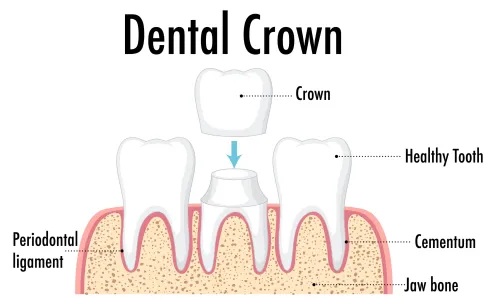
Preserve the natural tooth before comparing replacements. Root canal treatment followed by a crown is preferable to extraction when the tooth has enough sound structure, a restorable root and manageable gum support. Removing a treatable tooth creates a replacement problem that did not need to exist.
| Option | Main advantage | Main trade-off |
|---|---|---|
| Implant-supported crown | Does not require cutting down adjacent teeth | Requires surgery, healing and long-term maintenance |
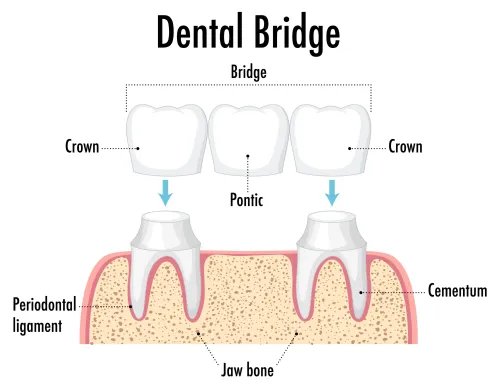
| Conventional three-unit bridge | Usually faster and avoids implant surgery | Neighbouring teeth must be reduced for supporting crowns |
| Resin-bonded bridge | Preserves more natural tooth structure | The bonded wing can debond |
| Removable partial denture | Avoids surgery and may cost less | It is removable and can feel less stable |
A conventional bridge becomes more reasonable when the neighbouring teeth already need large fillings or crowns. Cutting healthy teeth solely to support a bridge is a more significant trade-off.
An implant preserves those teeth, but it is not automatically the best choice: bone condition, gum health, bite, medical history, smoking, treatment time, budget and personal preference all matter.
Use a dental clinic in Nashik for one missing tooth that compares these choices rather than presenting only an implant. During a consultation for missing tooth replacement in Nashik, ask whether the tooth can be saved, whether the adjacent teeth can carry a bridge, and what surgery, healing, cleaning and future maintenance each option requires.
What must the first examination and scans reveal?
A complete consultation at a dental clinic in Nashik must establish whether the missing-tooth site can support each replacement option, not simply confirm that an implant is possible. An implantologist in Nashik should inspect the gap, adjacent teeth, fillings or crowns, root positions, gum pockets, bleeding, plaque control and signs of periodontitis.
The clinician should record your bite, opposing tooth, contact points, available space and the shape and thickness of the gum. The assessment must also check whether adjacent teeth are healthy enough to support a conventional bridge and whether the extraction site has enough bone and gum tissue for the planned restoration.
- Review smoking, diabetes and other medical conditions that affect surgery or healing. List medicines that influence bleeding or bone healing, and describe previous extractions, root canals, implants, grafts or other dental treatment.
- Use a periapical X-ray to examine individual roots and surrounding bone. A panoramic radiograph gives a wider overview of both jaws.
- Use CBCT when cross-sectional, three-dimensional information is needed to position an implant around limited bone, an upper-jaw sinus or a lower-jaw nerve canal. Do not accept CBCT automatically when lower-exposure imaging answers the clinical question.
Active untreated gum disease and poor plaque control must be stabilised before implant surgery. Skipping that step increases the risk of inflammation around the future implant and can compromise the result.
What happens during single-tooth implant treatment?
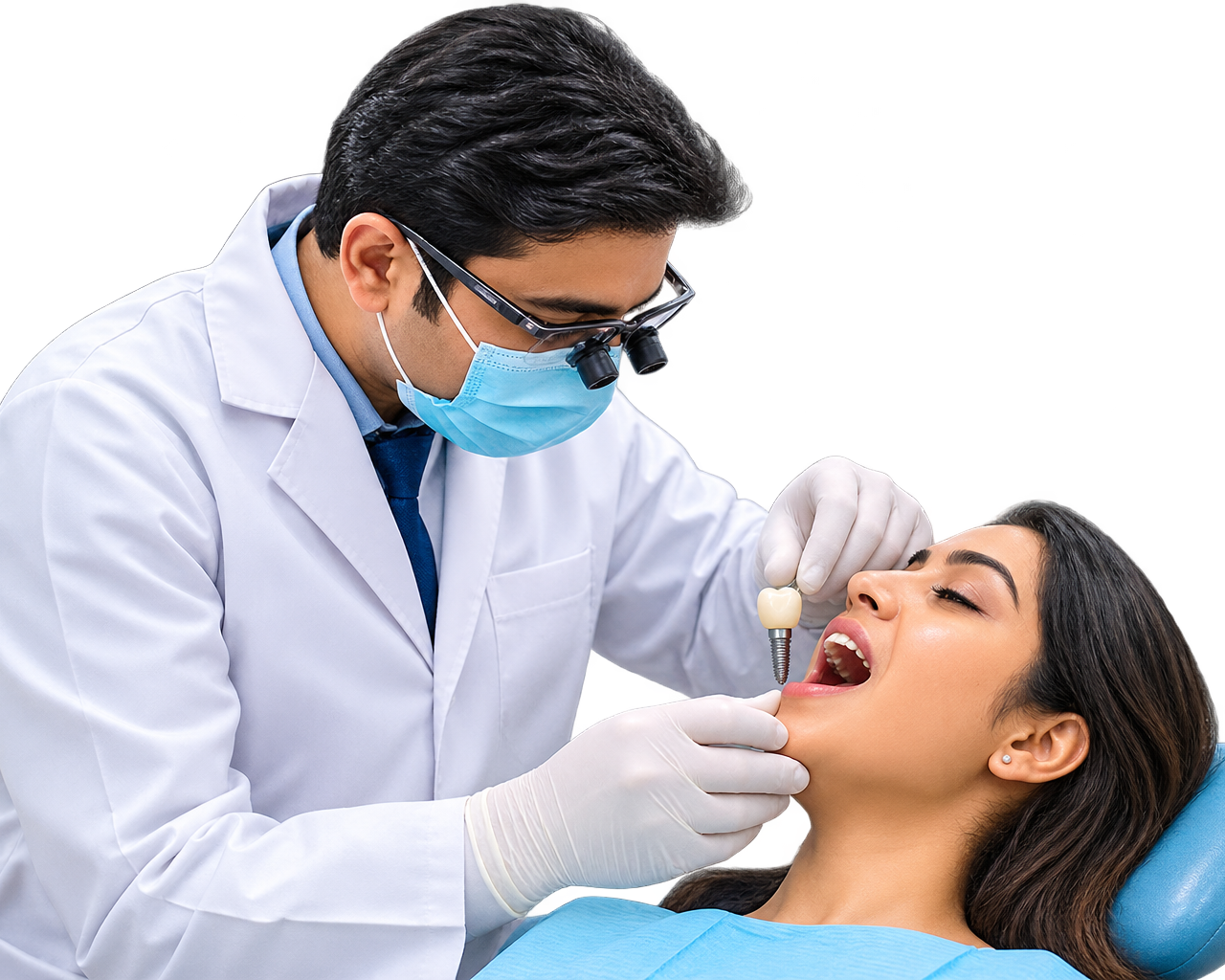
A single-tooth implant is usually a staged replacement, so it takes longer than a bridge. If the tooth remains but cannot be saved, extraction comes first; the implant may be placed immediately only when infection, socket walls, bone volume, gum stability and primary fixation allow predictable positioning.
1. Extraction and site assessment: The clinician checks the socket, bite and gum shape. Ridge preservation, bone grafting or soft-tissue augmentation adds a healing phase when tissue is insufficient.
2. Implant placement: If the socket is unsuitable for immediate placement, allow it to heal before surgery. In the upper jaw, a sinus lift may be discussed when bone beneath the sinus is inadequate. Near the lower-jaw nerve canal, three-dimensional planning and grafting may be needed when bone height or width is limited.
3. Integration: After placement, osseointegration allows the implant to bond with surrounding bone before the abutment or connector is fitted. This is a waiting stage, not a fitting appointment.
4. Crown delivery: The laboratory makes the final crown after the implant and surrounding tissues are ready. A temporary tooth is not an immediate permanent crown; immediate provisionalization requires primary stability and controlled bite forces.
| Implant plan | Bridge plan |
|---|---|
| Surgery and healing | No implant surgery; usually faster |
| Missing-tooth replacement in Nashik | Uses neighbouring teeth as supports |
| Dental implant in Nashik | Requires integration, abutment and crown |
Total time depends on extraction healing, grafting, integration and laboratory fabrication. Request a staged written timeline rather than accepting one universal duration.
How do you evaluate a dental clinic and its implant quote?
A trustworthy dental clinic in Nashik for one missing tooth gives you a staged plan, not an implant-only price. Ask:
- Who performs the surgery, and who designs and fits the crown? Request recognized dental qualifications, documented implant training, experience with the proposed procedure, and registration with the State Dental Council or National Dental Commission register.
- Does the plan use a diagnostic wax-up or digital design? Which implant system is proposed, and why does it suit your bone, available space and bite?
- What happens if the implant cannot be placed as planned? Ask for each healing interval in writing, an urgent-care contact, and the maintenance schedule after delivery.
Compare the quote line by line:
| Item | Implant-only quote | Complete treatment plan |
|---|---|---|
| Consultation and imaging | Often excluded | Consultation, X-rays and CBCT when indicated |
| Surgery and site preparation | Implant placement only | Extraction, grafting or sinus lift, when justified |
| Replacement tooth | Implant fixture only | Provisional tooth, abutment and final crown |
| Aftercare | Limited or unclear | Medicines, follow-ups and complication management |
A dental clinic in Nashik should explain exclusions before you pay. Dr. Bhonsale's Dental Clinic & Implant Center is one local option for comparing restorative, implant and prosthodontic alternatives, including the plan behind the price. An implantologist in Nashik should also explain bridge and denture alternatives rather than treating the implant label as the decision.
Related services
Replacement Of Missing Tooth Or Teeth Dental implants are permanent solutions for missing teeth, designed to mimic natural tooth roots and provide a strong foundation for fixed or... View service → |
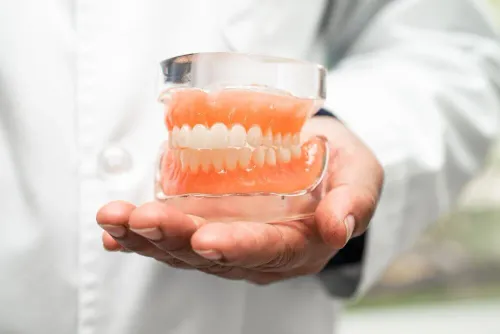
Replacement of Missing Teeth (Complete & Partial Dentures) Dr. Bhonsale offers custom-made complete and partial dentures to replace missing teeth. View service → |
What maintenance and risks continue after the tooth is replaced?
Fitting a crown, bridge or denture does not end missing-tooth care. An implant can develop peri-implant mucositis or peri-implantitis, suffer excessive loading, fracture, or fail after successful osseointegration. A bridge can loosen or decay at its supporting teeth, while a denture can rub tissue or lose stability.
Brush around the crown, clean between teeth with floss or interdental brushes as instructed, and attend professional reviews. Each review should monitor the implant tissues, crown margins, contact points and bite; excessive contact can overload components before you feel pain. Report looseness, bleeding, swelling, pain on chewing, a changed bite or a chipped crown promptly.
Treat active gum disease before implant treatment and keep it controlled afterward: poor plaque control and a history of periodontitis raise inflammatory risk. Smoking is a modifiable risk factor for poorer healing and implant complications, so ask for individual cessation advice rather than accepting reassurance that smoking has no effect.
| Option | Main trade-off | Ongoing point |
|---|---|---|
| Implant crown | Preserves adjacent teeth; requires surgery and healing | Lifelong cleaning and reviews |
| Bridge | May be quicker; uses supporting teeth | Clean under the replacement tooth; monitor supporting teeth |
| Denture | Avoids surgery; removable | Remove and clean it; fit and stability can change |
For a dental implant in Nashik or missing tooth replacement in Nashik, choose from these trade-offs based on clinical findings, not the treatment label alone.
Frequently asked questions
Which replacement is right for one missing tooth?
An implant with a crown replaces the root and tooth, while a fixed bridge uses neighbouring teeth for support. A removable partial denture is another option. The choice depends on bone volume, gum health, adjacent teeth, medical history, time and budget.
What should the first examination and scans reveal?
The examination should assess the extraction site, gum support, neighbouring teeth, bite, space for the crown and signs of infection. A CBCT scan can show three-dimensional bone height, width and the position of structures such as the maxillary sinus or inferior alveolar nerve.
What happens during single-tooth implant treatment?
Treatment includes planning, implant placement, healing, an assessment of integration and attachment of the abutment and crown. Bone grafting or gum treatment comes first when the site lacks adequate support.
How should you evaluate an implant quote?
Check whether the quote separately identifies consultation, scans, extraction, grafting, implant fixture, abutment, crown, temporary tooth, medicines, follow-up visits and any laboratory charges. Ask for the implant system, crown material and warranty terms in writing.
What maintenance and risks continue after replacement?
Brush twice daily, clean around the crown and implant with interdental brushes or floss designed for implants, and attend examination and professional cleaning visits. Persistent bleeding, swelling, pain, looseness or a change in the bite needs prompt review.
Related service
Fixed Teeth (Crowns & Bridges) Crowns (caps) and bridges are fixed prosthetic devices used to restore damaged teeth or replace missing ones. View service → |
Keywords