The deciding factor is not the label on an advertisement but the condition of each dental arch: whether any usable teeth remain, whether they can support a prosthesis, and whether they can be saved. By the end, you will know which questions to ask about dentures, implants, bridges, treatment stages, and the limitations of each option.
Key takeaways
- Complete dentures replace every tooth in one upper or lower arch.
- Partial dentures require stable, usable natural teeth for support.
- Check gums, bone, decay, bite, and remaining teeth before choosing.
- Compare removable dentures with bridges, implants, and implant-supported dentures.
The quickest decision rule: what teeth remain in each arch?
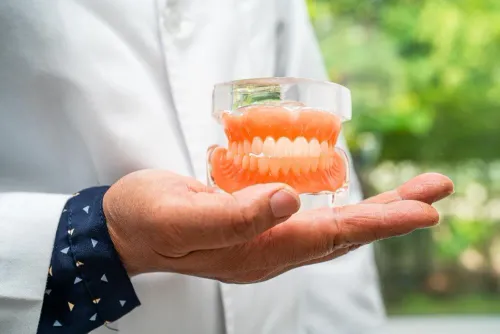
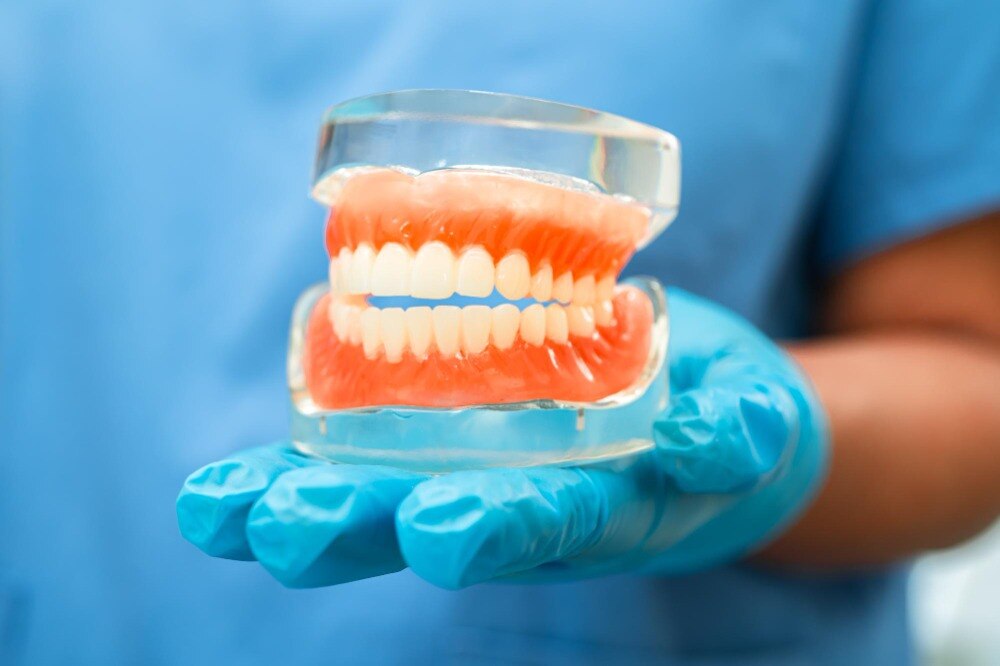
Count usable teeth separately in the upper and lower arches. A complete denture replaces every tooth in one arch; a partial denture replaces selected missing teeth when usable natural teeth remain.
| Situation | Usual denture category | What it means |
|---|---|---|
| Upper arch has no usable teeth | Complete denture | Replaces all upper teeth |
| Lower arch has some suitable teeth | Partial denture | Replaces selected lower teeth |
| Both arches have no usable teeth | Complete dentures | Replaces the upper and lower teeth |
| Retained roots or implants remain | Overdenture | Sits over them for added support and retention |
A person can need a complete denture in the upper arch and a partial denture in the lower arch, or the reverse. Full dentures in Nashik can mean an upper denture, a lower denture, or dentures replacing both arches; the term does not automatically mean every tooth in both jaws will be removed.
Remaining teeth shape partial-denture design. Rests, clasps, precision attachments, and other components may use them for support and retention, while the gums and ridge carry part of the chewing load. Do not choose a partial merely because some teeth are present.
Before choosing complete dentures or partial dentures in Nashik, check whether damaged teeth can be saved with root canal treatment, crowns, periodontal care, or fillings. Denture options for missing teeth also include overdentures, which differ from conventional complete dentures because they sit over retained roots or implants.
What must be checked before a partial or complete denture is recommended?
The examination decides whether a denture is suitable; it is not merely a fitting appointment. The dentist should inspect every remaining tooth for decay, cracks, mobility, gum attachment, root support, spacing, and long-term prognosis. Dental radiographs can reveal hidden decay, infection, root condition, and bone levels.
The dentist also examines the gums, supporting ridge, jawbone, bite, jaw relationship, and space available for artificial teeth. The plan should state which teeth will be retained, treated, or removed, and why.
Suitability also depends on:
- Oral hygiene, dry mouth, smoking, medical conditions, and expectations about appearance and chewing.
- Gag reflex, hand strength, dexterity, memory, and your ability to remove and clean the appliance.
| Finding | Decision it may change |
|---|---|
| Loose or badly decayed supporting teeth | A partial denture may fail; treatment or extraction comes first. |
| Uncontrolled gum disease or inadequate hygiene | Stabilise the disease and improve cleaning before using a partial. |
| Need for fixed stability | Compare bridges, implants, or implant-supported dentures with removable partial dentures in Nashik. |
| Teeth with a realistic restorative prognosis | Do not choose a complete denture first; root canal treatment, crowns, periodontal treatment, fillings, or staged care may preserve them. |
| No usable teeth in the arch | A complete denture becomes an option after assessing the ridge, bite, health, and expectations. |
These checks apply to all denture options for missing teeth. A complete denture is the wrong first choice when salvageable teeth can contribute to function or support, while a partial is the wrong choice when its supporting teeth cannot carry it reliably.
Which partial-denture design fits your teeth and priorities?
Acrylic, cast-metal, and flexible partials are not interchangeable. The right choice depends on how much support your remaining teeth can provide, how visible the appliance may be, and whether you need a temporary or long-term design.
| Option | Strengths | Trade-offs |
|---|---|---|
| Acrylic partial | Easier to modify or repair; suits a temporary or transitional stage | Usually bulkier and less stable |
| Cast-metal framework | Thinner and more rigid; rests and clasps improve support and reduce movement | Needs sound supporting teeth and costs more than basic acrylic |
| Flexible partial | Less visible clasp appearance; useful flexibility | Harder to repair, reline, or adjust precisely; flexibility does not replace tooth support |
Before choosing among denture options for missing teeth, ask:
- Where will the clasps show when I smile?
- Which teeth will carry pressure through rests or other supports?
- How thick will the base feel against my tongue or palate?
- Can it be repaired if I lose another tooth?
- What happens if a supporting tooth becomes loose or fails?
An overdenture retains selected roots or uses implants beneath a removable denture, adding support and retention. A conventional complete denture rests on the gums and residual ridge. That distinction matters when comparing partial dentures in Nashik with full-arch alternatives.
An immediate denture placed after extraction is a short-term fit, not a permanent promise. As the tissues heal and the ridge changes, it needs adjustment, relining, or replacement. A cast-metal design can also fail if the teeth meant to support it are weak.
How do dentures compare with bridges, implants, and implant-supported dentures?
Removable complete or partial dentures avoid implant surgery and can replace several teeth, but they move more during chewing. You remove them daily for cleaning, and extraction-related jaw-ridge remodeling continues beneath them; relining, rebasing, or replacement may eventually be necessary. Full dentures in Nashik can therefore be practical without being permanent in fit.
| Option | Main advantages | Main requirements and trade-offs |
|---|---|---|
| Complete or partial denture | Replaces several teeth without surgery; usually quicker to provide | More movement, daily removal and cleaning, repair needs, and changing fit as the ridge remodels |
| Fixed bridge | Feels more stable and avoids a removable appliance | Needs suitable neighbouring teeth, preparation of those teeth, and cleaning beneath the replacement tooth |
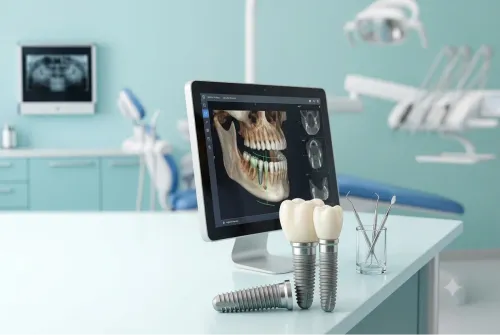
| Individual implant or implant-supported bridge | Fixed support without relying on an adjacent tooth | Surgery, adequate bone or bone augmentation, healing time, hygiene, medical-risk assessment, and higher total treatment demands |
| Implant-supported denture | Improves retention while remaining removable | Requires implants, suitable bone and health, maintenance, and future repairs |
An implant-supported denture deserves particular consideration for a lower complete denture: the lower arch has less supporting area and must accommodate tongue movement, so stability is harder to achieve. Suitable denture options for missing teeth depend on treatment time, surgery, maintenance, likely longevity, repair needs, and total cost—not advertised prices alone.
An examination determines whether complete dentures or partial dentures in Nashik, a bridge, or implants best fit your teeth, bone, health, and priorities. No option prevents every future change. Extraction continues to alter the ridge.
What happens from examination to denture delivery and follow-up?
Choosing complete dentures or partial dentures in Nashik starts with an examination, not a fitting appointment. Ask a denture clinic in Nashik for a written plan before committing.
1. Your dentist examines each remaining tooth for decay, cracks, mobility, gum attachment, root support, spacing, and prognosis. Radiographs assess roots, bone levels, infection, or hidden decay; the dentist also checks the ridge, bite, and jaw relationship.
2. Control decay and gum disease first. Extract teeth with a poor prognosis when indicated. If healing is needed, allow it before impressions; an immediate denture follows extraction, then requires adjustment as tissues change.
3. Impressions or digital scans record the mouth. The dentist records your bite and jaw relationship so the laboratory can position the artificial teeth correctly.
4. At the try-in, check tooth position, appearance, and speech before the denture is processed. Delivery includes fitting it and checking pressure points.
5. Review visits address sore spots, looseness, clicking, speech, and chewing. Return for pain, ulceration, persistent looseness, or clicking instead of adjusting it at home.
6. First-week changes include increased saliva, altered speech, sore areas, and difficulty chewing. An immediate denture is not guaranteed to remain an exact fit after extraction-site healing.
7. Remove dentures for cleaning and, unless instructed otherwise, while sleeping. Clean the appliance, gums, tongue, and remaining teeth daily; avoid abrasive household products and hot water. At Dr. Bhonsale's Dental Clinic & Implant Center, request written details covering retained or removed teeth, denture type, alternatives, adjustment visits, repair or reline arrangements, and total fees.
Related service
Replacement of Missing Teeth (Complete & Partial Dentures) Dr. Bhonsale offers custom-made complete and partial dentures to replace missing teeth. View service → |
Frequently asked questions
What is the quickest way to choose complete or partial dentures?
Count usable teeth separately in the upper and lower arches. A complete denture replaces every tooth in one arch, while a partial denture replaces selected missing teeth when usable natural teeth remain.
What must be checked before getting dentures?
A dental examination should assess remaining teeth, gum disease, decay, loose teeth, jawbone support, bite, oral tissues, and any extractions needed before denture construction.
Which partial-denture design should I choose?
The suitable design depends on the location and number of missing teeth, the strength of supporting teeth, appearance, chewing needs, budget, and whether you prioritise easier cleaning or greater stability.
How do dentures compare with bridges and implants?
Dentures replace several teeth with a removable appliance. Bridges are fixed but use adjacent teeth for support. Implants anchor replacement teeth in the jaw, while implant-supported dentures improve retention without replacing every tooth with an individual implant.
What happens during denture treatment?
Treatment usually includes examination, X-rays when needed, treatment of unhealthy teeth or gums, impressions or digital scans, bite records, a trial fitting, final denture delivery, adjustment visits, and cleaning instructions.
Keywords