A new denture affects more than your appearance: speech, saliva control, chewing, comfort and confidence all need testing before an important occasion. You will be able to identify the right type of denture, set a workable treatment schedule, and decide what to do if the event is only days or weeks away.
Key takeaways
- Complete dentures replace all teeth in one upper or lower arch.
- Compare fit, stability, treatment time and maintenance before choosing dentures.
- Start appointments weeks ahead; rushed dentures leave less time for adjustments.
- Schedule a review before the event and practise speaking and eating beforehand.
When is a complete denture the right treatment for your mouth?
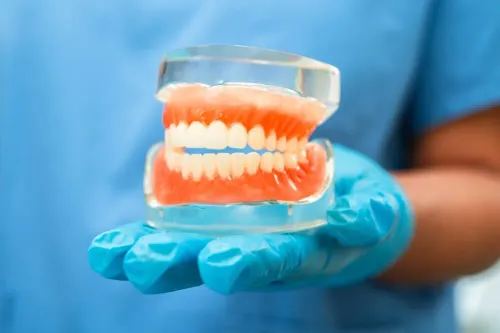
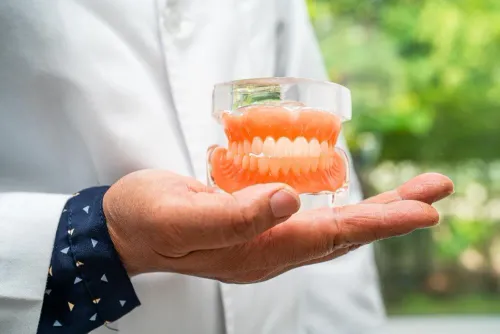
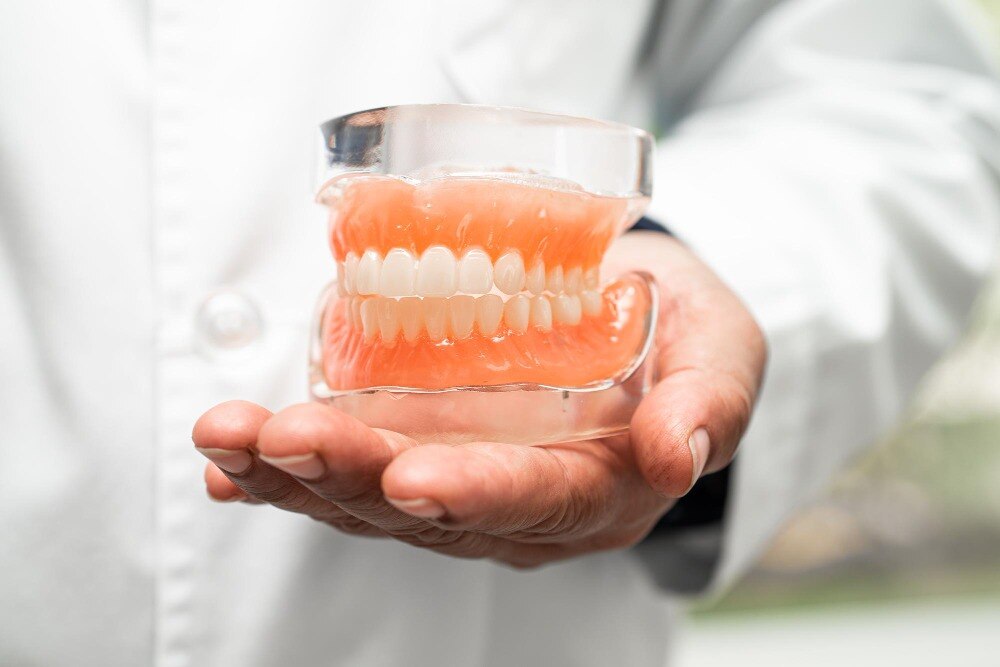
A complete denture is the right treatment when every tooth in one arch is missing, all remaining teeth in that arch are planned for extraction, or the upper or lower jaw is already edentulous. It does not automatically mean replacing every tooth in your mouth.
Assess each arch separately. You might need an upper complete denture while keeping natural lower teeth, using a lower partial denture, or choosing implants below. An upper denture covers much of the palate and usually gains support from a broader tissue surface.
A lower denture rests on a smaller ridge, while the tongue and mobile floor of the mouth can move it; lower stability needs its own discussion.
| Option | What it replaces | Main point to discuss |
|---|---|---|
| Upper complete denture | All upper teeth | Palate coverage, retention and speech |
| Lower complete denture | All lower teeth | Smaller ridge, tongue movement and stability |
| Upper-and-lower complete dentures | All teeth in both arches | Chewing, bite, speech and adaptation together |
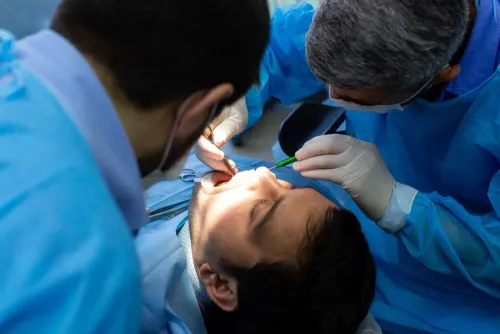
Before fabrication, ask for an examination of the gums, residual roots, extraction sockets, ulcers, infection, bone shape and oral hygiene. A denture should not cover a non-healing socket or unexplained lesion.
If you are comparing complete dentures in Nashik before an important event, ask whether you need an upper, lower, or both dentures, and which foods and speech changes to expect. This matters when choosing complete dentures in Nashik.
How do complete dentures compare with partials, implants and fixed teeth?
A complete denture replaces every tooth in one arch, so “dentures for missing teeth in Nashik” does not automatically mean replacing every tooth in your mouth. It can avoid implant surgery, but it is removable and cannot recreate root sensation or normal chewing efficiency.
Lower dentures also face tongue and floor-of-mouth movement, making stability less predictable than an upper denture.
| Option | Stability and function | Surgery, healing and upkeep |
|---|---|---|
| Complete denture | Removable; restores appearance but offers less chewing efficiency | Avoids implant surgery; needs cleaning, adjustments and possible repairs |
| Partial denture | Preserves healthy teeth that support or retain it | Often the better choice when selected teeth remain usable |
| Dental implants | Stable replacement that feels and functions closer to fixed teeth | Requires surgery, healing, hygiene and long-term maintenance |
| Fixed bridge | Non-removable replacement supported by neighbouring teeth | Requires suitable supporting teeth and is difficult when an entire arch is missing |
| Implant-retained overdenture | Removable, with improved retention, particularly for a loose lower denture | Requires surgery, adequate bone or grafting, hygiene, maintenance and medical-risk assessment |
| Full-mouth implant rehabilitation | Fixed or implant-supported treatment with greater stability | Involves more procedures, healing time, cost and maintenance than a conventional denture |
For an important event, removable dentures avoid surgical healing, but allow time to correct pressure spots, movement, gagging and altered pronunciation. Hard, sticky and fibrous foods remain harder during early use; practise with small pieces and chew on both sides. Compare stability, surgery, healing, cleaning, repairs and available time before choosing.
A “full dentures near me in Nashik” search should lead to this comparison, not an assumption that the quickest option is best.
What appointment timeline gives you a safer result before the event?
A safer result comes from scheduling a new denture as a sequence of appointments, not a same-day cosmetic fix. If you are considering complete dentures in nashik before an important event, allow time for trial wear, speech changes, sore spots and adjustments.
1. At the consultation, the clinician examines both arches, discusses which teeth need extraction and records your medical and dental history.
2. At the impression or digital-scan visit, the clinician captures the shape of your gums, supporting tissues and jaw. Accurate records reduce the risk of a poor-fitting base.
3. Jaw-relation records establish how the upper and lower dentures meet, including the planned bite height. An incorrect record can cause clicking, chewing difficulty or jaw discomfort.
4. At the tooth try-in, check tooth position, lip support, speech and appearance before the final acrylic denture is made. Ask to see the result from the front and side, and read a few sentences aloud.
5. At fitting, the clinician checks the borders, retention, bite and pressure areas. Do not treat rubbing or looseness as something you must simply tolerate.
6. Schedule at least one adjustment visit before the event, with follow-up available for sore spots, clicking, slipping or unclear speech. Reading aloud and practising conversation help adaptation, but persistent problems usually need a professional bite or fit adjustment.
Ask how many laboratory visits complete dentures in nashik require, and place the try-in well before the occasion. Collecting an untested denture before a wedding, presentation or family gathering leaves no time to correct discomfort or pronunciation.
What can you do if the event is only days or weeks away?
Tell the dentist your event date before starting treatment. If several teeth need extraction, an immediate complete denture can be inserted on the extraction day, preventing a toothless period.
| Option | Best use before an event | Important limitation |
|---|---|---|
| Immediate complete denture | You need teeth on extraction day | Healing gums and bone change the fit, so adjustments, a reline, remake or replacement may follow |
| Conventional complete denture | You can wait for extraction sites and supporting tissues to heal | Fit is more predictable, but you may have a period without fixed teeth |
| Existing denture repair, reline or adjustment | Your current denture is damaged, loose or uncomfortable | It will not solve every underlying tissue or fit problem |
Healing time depends on the number and condition of extractions, infection, smoking, diabetes and your individual tissue response. A conventional denture is not a same-day cosmetic fix, so build in trial wear and at least one review before the occasion.
If you already own a denture, ask whether repairing, relining or adjusting it is faster than making a new one. Do not use a large amount of adhesive to rescue a loose or painful denture; movement or recurring ulcers require an examination.
For a “full dentures near me in Nashik” search, Dr. Bhonsale's Dental Clinic & Implant Center can help compare an existing denture, immediate denture and conventional replacement against your schedule, including the phrase “complete dentures in Nashik before an important event” in your planning.
Related service
Replacement of Missing Teeth (Complete & Partial Dentures) Dr. Bhonsale offers custom-made complete and partial dentures to replace missing teeth. View service → |
How should you prepare for wearing dentures on the event day?
Wear the denture during trial periods before the occasion, especially when arranging complete dentures in Nashik before an important event. Notice rubbing, gagging, looseness, clicking or speech changes. Anyone searching for dentures for missing teeth in Nashik should have the gums, residual roots, ulcers and infection checked before fabrication.
Use this routine:
- Start meals with small pieces of softer food. Chew on both sides, and postpone very hard, sticky or fibrous foods until you know how stable the denture is.
- Remove most removable dentures at night unless your treating clinician gives a specific reason not to. Clean the denture and your mouth separately so the tissues can rest.
- Rinse and brush the denture with a denture brush or soft brush over a basin or folded towel. Avoid hot or boiling water, which can distort acrylic, and ordinary abrasive toothpaste, which can scratch it.
- Carry a denture case, cleaning supplies, water and any clinician-approved adhesive.
| Problem | What to do | What it may require |
|---|---|---|
| Repeated adhesive use or movement | Do not add larger amounts | Examination and fit correction |
| Recurring ulcers | Stop treating them as normal | Examination for adjustment, reline, remake or tissue problems |
| Unclear speech or clicking | Arrange a review | Bite or fit adjustment |
Adhesive cannot correct a poor fit. Keep follow-up appointments even when the smile looks good; comfort and tissue health still matter after the photographs are taken.
Frequently asked questions
When is a complete denture the right treatment?
A complete denture suits an arch with no teeth, or an arch where all remaining teeth are planned for extraction. It does not automatically replace every tooth in your mouth.
How do complete dentures compare with partials, implants and fixed teeth?
Complete dentures replace a whole arch, partial dentures replace selected missing teeth around remaining teeth, implants anchor replacements in the jaw, and fixed teeth stay attached to implants or prepared natural teeth. Compare stability, treatment time, surgery, maintenance and cost.
How long before an important event should you plan complete dentures?
Start as early as possible because examinations, impressions, try-in appointments, delivery and adjustment visits take time. Extraction sites also need healing when immediate dentures are not planned.
What can you do if the event is only days or weeks away?
Ask for an examination immediately. Your dentist can explain whether an immediate denture, an existing denture adjustment or a temporary solution is safe; do not buy an unexamined denture online.
How should you prepare for wearing dentures on the event day?
Wear them during practice, begin with soft foods, use small bites, practise speaking aloud, carry the denture case and avoid testing unfamiliar adhesive or foods for the first time at the event.
Keywords